Showing posts with label science fiction. Show all posts

Tuesday, September 27, 2011

Jericho – (Immediately) Post-Apocalypse Drama.

Frequently, even though I have plenty of games and television series to keep me busy when not looking for work, writing or studying, I get the urge to try something new, and my first destination is Sci-Fi TV on Netflix streaming. Among the many shows that are in that category that I've seen already, there are a few I never watched for one reason or another. Jericho was one of those. My wife decided to start up on Jericho, we'd both heard about it years ago and it sounded vaguely interesting. It was one of those shows, I recall when it was on the air, that got canceled and a lot of people were upset. Normally, I'd be riding that bandwagon years after the fact and decrying the studios for not giving great TV a chance and wagging my finger at the public for preferring more vapid entertainment to allow such a situation to occur. Not this time. After watching the first handful of episodes of Jericho, my main question isn't: "Why did they cancel this?" My main question is: "How did this ever get a 2nd season?"

Once I'd gotten a hold of the concept, I really wanted to like this.

To be fair to the show, I think that placing this series in the sci-fi category is not particularly accurate, so a portion of my willingness to bail early on the series probably rests with it not being what I expected. Jericho is really a disaster drama set in the early stages of the post-apocalypse immediately after the disaster that ends civilization. In addition to people coping with the uncertainty of an apocalyptic event, trying to survive short-term, and hold a community together to maintain order, the show gets into the mystery of just what happened and why. On its surface, this is the sort of concept that appeals to me. Skeet Ulrich plays Jake Green, an adult who left the small Kansas town of Jericho in disgrace, but after cleaning up his life, he turns up to ask for his inheritance to get a fresh start. While in town for only a few days, the world ends, and he finds himself caught in his hometown and steps up to provide leadership in a crisis.

One of the problems with the series is that far too many events are played over the top with dramatic disaster music and characters explaining how the next action could kill people. Sure, many of the situations are dangerous, and the lives of the characters are frequently threatened in the immediate aftermath of nuclear weapons detonating in major cities around the United States. The problem is that it is impossible to maintain dramatic tension when everything is a crisis. Even if it is realistic that nearly every environment and action taken is risky or life-threatening, for the sake of a watchable narrative a point has to be reached where only the most dramatic crises are portrayed, and there is a little bit more summing up and getting on with the story. The sort of music heard once or twice in a good action movie, in the scenes where you can forget that of course the hero will survive... that music is constantly being played in Jericho. A little more often, and I'd have suspected that it was a sly, subtle disaster film parody because the music would have been unintentionally funny... it stops just short of that, in "tedious" territory.

Large cast, small, petty personalities for all but one of the characters pictured.

The single largest problem with Jericho is the characters, and how difficult it quickly becomes to care whether any of them live or die. The entire town is populated with stock characters, and most of them are jerks. The closer to being a decent person you are in Jericho, the more likely you are to be uninteresting by virtue of not having a shred of originality in your characterization. Maybe this is realistic, most people aren't interesting and in a crisis, they become selfish, petty and altogether unpleasant. This doesn't excuse them not being entertaining. I found myself still curious about the setting, and the mystery of why and how the apocalypse happened, but realized that I could look those details up online without having to suffer through watching the overly dramatic struggle of people who could die at any moment without an ounce of emotional impact for me. There is a single interesting man, but he's clearly not what he seems from the start, and he can't carry the rest of the show on his own, especially since he seems to be in opposition with them early on.

In some ways, Jericho, made in 2006, reminds me of this year's Falling Skies, as the concept of the apocalypse immediately after it happens is still a good one. Jericho, however, shares all of the flaws Falling Skies has without any of the things that makes the Alien Apocalyptic survival series good TV in spite of them. I can really only recommend this show if you are a disaster film junkie, or a fan of Falling Skies who is completely caught up and thirsting for something similar to the point you'd accept a lesser, diluted experience while waiting for more material. I'm certain that fans of the show might complain that I didn't give it enough of a chance, maybe it did get better later. I just couldn't watch anymore of a show that felt like an 80/20 mix of Dawson's Creek and Fallout. In a show with an ensemble cast this size, the characters and their relationships must be interesting to watch, or a great concept is wasted. 

Friday, September 23, 2011

My Review of Franklyn – A Mixed Bag of British Sci-Fi/Drama

Okay, I saw the trailer for Franklyn, and I'll admit it, they suckered me. The promo spots for this film, or at least the one I saw, focus on the most unusual elements of a film that is about two-thirds fairly mundane. You have Ryan Phillipe in a badass looking mask as some sort of dark vigilante in a fantastic dystopia that looks like it could have sprung from the mind of Guillermo del Toro, and a lot of unusual imagery from a dark haired woman in too much makeup, with occasional quick cuts of contemporary London. This trailer is, to risk understatement, misleading. All of the images presenting Franklyn as an unusual and risky dark superhero fantasy are advertising a different film, not the one that was made. Was the film presented in the trailer better or worse than the reality of what Franklyn delivers? That's a more difficult question.

This was the least disingenuous poster I could find for the film.

This is a difficult movie to summarize without giving the whole game away, as the first third of the film is complex, disconnected and the audience spends much of the time asking "What the hell is going on?" The characters we are shown have stories that on their own are not difficult to follow, but the plot and tone of each of the four stories being told suggest that they don't belong in the same film. One of the stories (the one that the trailer chooses to focus on, naturally) doesn't appear to belong in the same world as the others. There are bits of each tale that are well told, and a few characters that the audience can identify with, but for much of the film, I found myself wishing that they'd just get on with it. We have a dangerous masked figure reminiscent of batman dressed like Decker from Nightbreed, a stock troubled young female artist, a man who is dealing with having been left by his fiancee very near the wedding day, and an old man looking for his son.

First, let's start with Jonathan Preest, as his visual style sells the movie. I have to admit, the mask itself pretty much guaranteed that I'd check the film out. Ryan Phillipe gives us his best Rorschach impersonation in Meanwhile City, a place where everyone has a religion, as required by law. Everyone, that is, except for Jonathan Preest. He does his private detective work while evading the top hat and goggle-wearing Ministry Clerics, and the visuals surrounding everything he does are pretty awesome. The problem is, Meanwhile City is a one-trick pony, we get it... everyone has a different weird faith and we are constantly given examples without any deeper exploration of what such a society would be like. Preest himself is a collection of cliches, his gravelly narration and sparse characterizations have been seen dozens if not hundreds of times before. I'll grant that the overbearing fantasy without substance is likely as a result of filmmaker choice rather than lack of skill or imagination, but I'm not sure that gives it a pass.

Emilia, in the middle of her "art." Any time I saw this character's life
in danger, I found myself rooting for natural selection.

This brings us to Emilia, whose tale is, if anything more vapid, pretentious and cliche than anything in the fantastic Meanwhile City. I hated this character for the combination of not a single shred of anything unique or new and the overwhelmingly terrible art-house crap that is her work as an artist that the audience must suffer through. She is played straight down the numbers of any one of hundreds of gothy artistic women in films and comics. Wealthy mother, missing father, smokes and wears black and too much makeup while painting and shooting videos about sex, death and beauty while being depressed about her life and work. I found myself agreeing with her college art professor/advisor with regards to his assessment of how devoid of substance her performance art schlock routine was. Once again, given the presentation of the character and her role in the story, all of this could have been done purposefully, but that doesn't mean it belongs in something other people have to watch.

Milo is a little bit more sympathetic as a young earnest man who has just been jilted by the woman he was about to marry and leans on his friends and family while he tries to put his life back together. What little whining this character does is totally justified by what we see him going through, and a great performance from his supporting characters (his best man, his mother and the best man's better half) keeps the scenes from dragging. He begins seeing a mysterious woman around town as he tries to figure out how to cope with his destroyed love life, and pursues her into some unusual places, giving us just a tiny hint of the bizarre in his plot. Overall, played with more subtlety than the previously discussed characters, as we start filling in answers to the questions posed to his story, it carries a bit more emotional weight.


The fourth character, Peter Esser, is a highly religious man who is looking for his missing son. For me, his tale was the most interesting, and it has the least to do with any supernatural, fantastic or weird bits, at least to start. From the promotions for this film, you'd think that this part of the story didn't exist, as everything that doesn't focus solely on the Meanwhile City plot at best only shows the attractive young people as leads in the movie. This is a shame, as Esser's journey is a better detective story than anything in Preest's part of the film, and told from a unique perspective, to boot. I'd have liked to see the old man's search through hospitals and homeless shelters expanded on, as this bit had many of the best scenes in the film, and how his story ties into the other three very nearly redeems them by the end.

The film, by the end, does pay off in terms of a justification for why these characters are all in the same movie, and I was satisfied with the explanation. Franklyn isn't a bad film, but there is one character whose entire role in the movie annoyed me and diminished the experience as a whole, and the film that was advertised could have been a great one. Meanwhile City and Preest had potential, if there had been more substance to all of the great visuals, but in the end, what we got there was a really cool looking mask with absolutely nothing behind it. It is worth mentioning that this film had a fairly low budget and was the director's first film, and given those facts I'll give it credit for what it managed to do well. The final sequences could have been presented in a way that had more emotional impact and a better resolution, but I don't think "low-budget British sci-fi" when looking at the film as a whole. For those who have Netflix streaming, Franklyn is available as of the publication of this article, and it is worth a look. Just know what you are getting into, in spite of what the trailer promises.

Friday, September 2, 2011

Star Wars On Blu-Ray, Lucas at the Butcher's Block Again.

With the announcement of the Blu-Ray edition of the original Star Wars trilogy, and the latest round of George Lucas' tinkering, a lot of fans who thought they'd exhausted their contempt for the once-loved director are mad again. My instincts, and my inherent desire to play Devil's Advocate, make me look for the upside, I want to find the intellectual defense for his actions, and explain why it isn't such a big deal. After all, geeks hate Peter Molyneux, and I provided the benefit of the doubt in his case, so why not Lucas? At the risk of preaching to the choir, I just can't do it. I can't justify, explain or rationalize what Lucas has done since the prequels and the Special Edition. I cannot defend Greedo shooting first, replacing amazing puppetry with mediocre CGI or inserting Hayden Christiansen where he doesn't belong, which is anywhere on film. As years have passed, many geeks have learned that virtually everything we loved about the original trilogy is, at best, something Lucas had little to do with, and at worst, stuff he actively fought against inclusion in the films. And when he finally asserted complete creative control... Oh, boy.


I won't even type his damn name. Once we saw this character, most of
us suspected the worst about George Lucas, our worst fears confirmed at the mention of "midichlorians."

Compared to sins of the past, the newest changes are fairly minor, adding a bit of CGI so that Ewok eyes can move and blink, instead of clearly being glued to a furry suit, the unfortunate but expected replacement of a puppet-yoda with a CGI equivalent in Episode I: The Phantom Menace, and so on. However, there is one baffling change that demonstrates that Lucas is not only out of touch with, but is perhaps even openly hostile to the fans who have supported his work all these years. In Return of the Jedi, there's a critical moment at the end where Vader looks on as Emperor Palpatine tortures Luke. In silence, the wheels turn as he struggles with what to do, and when he makes his decision, he stalks over and picks up the Emperor, throwing him to his death in a moment of clarity that defines his redemption. In the Blu-Ray, when Luke is attacked, Vader will now scream “NOOOO!!!” just like in the often-mocked scene in Revenge of the Sith when Vader is first fitted with his armor. Either Lucas is ignorant of how this changes the scene, or he just doesn't care, believing that this is an improvement.

I should be numb to this sort of thing by now, incapable of being frustrated or angry and satisfied that I have my DVDs of the original theatrical cut and leave it there. You'd think that after his disrespectful comments toward fans and the backlash over the changes, Lucas could just leave well enough alone. He has shown repeatedly that he has no respect for the characterization established in the version of the films most fans prefer, or he is ignorant of how changing certain scenes fundamentally alters characters that people have loved for decades. Han waiting until Greedo fires makes him a fundamentally less interesting character, and his later growth from criminal to hero is mostly meaningless if he was pretty much a good guy to begin with. Vader screaming like a child when coming to Luke's rescue turns a determined choice to take the right action into an outburst of temper, a crime of passion, and diminishes the power of the character's redemption, which is the focal point of the entire trilogy.


Search your feelings, you know it to be true.

Since the success of the first three films, Lucas has behaved like the actor who becomes “undirectable” due to commercial success and begins churning out terrible, terrible films because there is no filmmaker to rein them in (think of the worst of the Mike Myers and Jim Carrey movies.) After finishing Episode One, Lucas screened it and the test audience gave the same criticisms fans have echoed for decades since. George Lucas listened to the critiques, and ignored them, proceeding with his vision. His revisions in the Special Editions included excising the award-winning Max Rebo song “Lapti Nek,” and replacing the scene with the grossly inferior “Jedi Rocks” CGI monstrosity, adding a fuzzy big-mouthed creature to the band for cheap laughs and additional marketing. His reasoning? The original song was “dated.”

Many of the classic moments throughout The Empire Strikes Back, which I re-watch regularly to appreciate the high point in Star Wars film history, were moments Lucas tried to change or cut. I am consistently surprised that Episode V has improved over the years in my estimation, and am disappointed to learn that the creator of the Star Wars Universe fought so hard to ruin it. Harrison Ford told a crowd at a charity event a story about the scene where Leia says goodbye to Han before he is frozen in carbonite. The classic romantic scene where Leia tells Han “I love you,” and his response: “I know.” Lucas hated the scene and actively argued that Han should say “I love you too,” until Ford and director Irvin Kershner fought Lucas over it right up until a test screening proved them right. It amazes me that the original films were any good at all, considering the repeated demonstrations of poor judgment on Lucas' part.


Seriously, search for "Lapti Nek" and then "Jedi Rocks," on YouTube and compare the scenes.

It is all well and good that a chorus of geeks despise George Lucas for his tampering with one of the greatest science fiction properties of all time, but it is his movie, so what's the big deal? I think the best person to answer that particular question must be... George Lucas. At least, the George Lucas from 1988, when he gave a speech to Congress, and made the following statements: "People who alter or destroy works of art and our cultural heritage for profit or as an exercise of power are barbarians.” These words have new context now, as does this later excerpt, from the same speech: “There is nothing to stop American films, records, books, and paintings from being sold to a foreign entity or egotistical gangsters and having them change our cultural heritage to suit their personal taste.” He later still asserts that “The public interest is ultimately dominant over all other interests,” and asks “Why are films cut up and butchered?”

Why, indeed, you son of a bitch.

Monday, August 15, 2011

Paul – Pegg and Frost meet E.T., as played by Seth Rogen.


I'll start with a declaration of bias with regard to the movie I want to talk about today. I'm personally a huge fan of Simon Pegg and Nick Frost, the projects they've collaborated on before (Shaun of the Dead and Hot Fuzz) are favorites of mine, and unless this is your first visit to the site, you know how much I love comic books and science fiction. So, Paul is a movie that was made with someone very much like me in mind. The degree to which they'd have had to screw this movie up for me not to like it is profound, as I was on board from the moment I heard the concept. I finally got around to seeing it this past weekend, and I can only say that my expectations were exceeded in every way. In the long run, it may not have the timeless quality of Shaun of the Dead, but for first time viewing, I think I enjoyed myself more seeing this than I did the first time round with the British Zombie comedy that made Pegg and Frost household names.


I heard a lot about this before it came out, but it didn't seem to stay in theaters very long.

The setup is so simple that it is amazing that it took so long for someone to make this film. (For all I know, there could be an obscure indie flick out there that is similar in concept, but if there is, I'm unaware.) Two mega-nerds from England go on holiday to San Diego Comic Con as the payoff of a lifelong dream. Clive Gollings (Frost) is a frustrated science fiction writer who had minor success as a teenager but has remained unpublished since. Graeme Willy (Pegg) is his best friend and partner, a talented illustrator who creates images to go with his friend's words that are good enough that the book covers alone should sell a pile of copies, that it, if Clive ever finishes his magnum opus. The friends have an incredible geeky time at Comic Con, and plan to follow it up with a tour of the UFO hotspots of the American Southwest.

The setup and establishment of the pair as likeable characters is necessary for what comes later to happen to characters who are more than just cardboard cutouts (treatment that the rest of the cast doesn't get,) but I'll grant nit-pickers that this first 30 or so minutes almost feels like it belongs in a separate film, as the pacing and storytelling are different from the rest of the movie. Along the road, the guys run into a geek-friendly diner owner (played by Glee's Jane Lynch) and a pair of stock idiot rednecks who immediately take a dislike to the British Geeks. Right after this, the movie takes off, picking up the main plot as the guys drive to the Black Mailbox in Nevada in their rented Winnebago and a pair of headlights is bearing down on them. Fearing that it is the rednecks come to beat them up, they get on the road and are quickly surprised when the lights belong to a car that suddenly flips off the road.


Slackers in a zombie apocalypse, Cops in a police action/comedy/murder mystery,
and now nerds in a Winnebago. These guys are great.

Clive and Graeme investigate, and the driver of the car steps out of the night, unharmed... he is a genuine alien, escaped from a military base. Clive faints, and the alien, named Paul, convinces Graeme to help him out before the people after him turn up to recapture him. Paul is a brilliant piece of natural-looking CGI, well animated and voiced by Seth Rogen. As for Paul's personality, well, if you are familiar with virtually any of the characters Rogen's played before, you know about what to expect from Paul. In this case, that isn't really a complaint, as the charismatic low-key slacker type is a cool contrast to the Frost and Pegg buddy comedy, and he fits into the dynamic well. If it works in making a film entertaining, I won't hold Seth Rogen's typecasting against him.

Cue the cross country buddy comedy flight from the government agents after Paul, led by the serious Agent Zoil played by Jason Bateman with his usual talent for playing quirky characters. Zoil has two new agents (Bill Hader and Joe Lo Truglio) with him who are kept in the dark and sort of goofy on their own... one of them is even a comic book geek himself. The trio work through Paul's backstory, bond a little bit, and then meet a nice girl raised in an extreme religious household who immediately catches Graeme's eye. Ruth (Kristen Wiig), a one-eyed Bible thumping Daddy's Girl, is abducted by the guys when Paul reveals himself to her in the midst of an argument about science and religion conducted through the Winnebago's bathroom door. Eventually winning Ruth over, the group continues north with their pursuers, who now include Ruth's gun and Bible-toting father.


Jason Bateman isn't the only Arrested Development alum to appear in this film, but he has the biggest role.

The film frequently makes clever references to various specific scenes from popular science fiction films and programs, and settles down as an action-comedy that feels exactly like a comedy that is somewhere between one of Rogen's films and one by Pegg and Frost should. Paul breaks one of the cardinal rules of the “alien on the run” film constantly, not seeming to care much if people see him, as he plans to be gone soon, and after all, who'd believe the stories anyway? The supporting characters are entertaining in their roles, including Agent Zoil's boss whose voice is heard over the phone throughout the film, and whose identity is supposed to be a big cameo reveal at the end, but clever sci-fi fans will recognize the voice right away. The pacing of the movie is a little awkward and unwieldy in spots, but it is so much fun that I didn't care.

By the time the movie was over, I'd laughed quite a bit, appreciated the development of the various characters, recurring gags and saw the plot through to its fairly predictable end. There were perhaps a few too many supporting characters for all of them to get their due, and I did frown a bit here and there at how heavy-handed the “Religious people are idiots” bit got played, but overall, this is a movie I not only liked quite a bit, but will probably even go out of my way to watch again. Anyone who is a fan of any of the principal actors will probably like this a lot, as it is more clever than a typical Rogen film and less dry than the other Pegg and Frost comedies. Whether that is an improvement or not on those individual styles of comedy or not is a matter of personal taste.

Wednesday, August 10, 2011

Eureka – More Science Fiction TV Gone Too Soon.

The news in the last week that SyFy has reversed their earlier decision to order a shortened sixth season of Eureka has people up in arms. I want to talk a little about that decision, the controversy and the show itself. Normally, in this kind of article, I could predictably be expected to play Devil's Advocate, tell the nerds raging on the internet that there's another side to the story. I won't be doing that. It isn't that I don't understand the other side. I get it. A show like Eureka is expensive to produce at the standards of quality its audience expects, and business realities sometimes force decisions such as whether to do the show with a budget that means it can't be done right, or to not do it at all. We've been given this bill of goods before, and this time, I'm not buying it. While I appreciate that it is more complicated than “people like it, ratings are good, so keep it on,” the explanation we've been given does not satisfy me. More on that later.


Group shot of the first season cast of Eureka. (Did I mention the show is streaming on Netflix?)

Eureka is a quirky show about a town in the United States (Eureka, Oregon) where the greatest geniuses the government and corporate sector could find live, work and share ideas. The central character is Sheriff Jack Carter who is neither scientist nor genius, but who was recruited from his work as a U.S. Marshal because his common sense, ability to connect with people and dedication to his work allow him to find the simple solutions that great minds think right past, and the town is safe. Many of the episodes concern a device or other dangerous technology or discovery that threatens at least the town, if not the world, and the investigation and research required to stop it before it is too late. Subplots involving Global Dynamics, the corporation that employs most of the citizens, and threats internal and external tell a larger story arc across the seasons.

The cast has counted among its recurring actors many geek favorites, and the leads are sure to be much loved for years to come for their work on this show. The two principal characters, Sheriff Carter and Dr. Allison Blake, who is first introduced as a Department of Defense liason to the town, are played by Colin Ferguson and Salli Richardson-Whitfield. The supporting cast includes Joe Morton, playing Dr. Henry Deacon, Erica Cerra playing Deputy Jo Lupo, and Neil Grayston playing Dr. Douglas Fargo. Over the years, the show has employed the talents of Matt Frewer, James Callis (played Gaius Baltar in BSG,) Wil Wheaton and geek sweetheart Felicia Day. The cast is able to consistently strike an unusual balance, pivoting between light-hearted comedy and the menacing weirdness of horror-tinged science fiction.


Nothing against the leads (pictured again, below) but the supporting cast
really brings the spark of genius to a show like this.

The cancellation announcement was handled in a particularly cowardly and unprofessional manner, with much of the cast finding out about the decision from fans who had seen the press release. The series will be forced to tie up all loose ends after being assured of an abbreviated sixth season to do so in only a single episode. [UPDATE:  Moments after I hit "publish", I saw a tweet indicating that SyFy would be giving the show's creators one more episode to wrap things up. Not satisfied, but credit where it is due.] The actors and producers are attempting to put the best face possible on the whole situation, attempting to demonstrate that they are more professional than the people who just put them all out of work are. Often, some of the blame for sci-fi TV not making it lays with the fanbase, who stop watching, stop talking about it, the ratings just aren't there. This was not the case for Eureka, as it was consistently one of the highest-rated programs on the SyFy Network. In the end, it came down to price.

We've heard this excuse before, and here is why that explanation does not satisfy me. The valuation for how much a television series should cost has been skewed over the last 15 years by the rise of a TV phenomenon that was interesting at first, but has formed the core of the most vapid and pointless “entertainment” on television. I am, of course, talking about the reality show. Network Executives love "reality" TV, as the shows are cheap to make, requiring no scripts, sets or special effects, and on many of them compensation for the principal “actors” isn't anywhere near what actors in scripted TV make. Is this what we want? Losing original, clever programming for more Jersey Shore, Real Housewives and Ghost Hunters? (By the way, I was a ghost hunter, and those guys are full of shit.) Reality TV, supernatural soap opera clones and professional wrestling now dominate a network that was once a great center for geeky TV. Their "rebranding" shows the lack of respect for their traditional fans, decisions like this add insult to injury.


Our principal stars of the show, Sheriff Carter and Dr. Blake. 

There is an intellectual arrogance among many of us geeks. We consider ourselves better than the unwashed masses that don't know how to fine tune settings on their personal electronics or effectively use Google to answer basic questions. We scoff at American Idol and the Bachelorette, but increasingly, we find the things that we enjoy are in the past. Internet “Save the Show” campaigns haven't worked in years, and I find myself thinking, watching and writing about television that has been cancelled way more often than I write about current shows. The things that we, in our arrogance, consider to be worthy, are going away and being replaced by a douchebag who calls himself “The Situation” making millions for being a tool on national TV. Thing is, I'm mad and I don't have any better ideas than any of the rest of us. I'm here preaching to the choir, and complaining on the internet.

The only way out, as far as I can see, is to stop supporting FOX, SyFy and the major TV networks who pretend to offer what we want, and then take it away. Anyone who, like me, is out of work has heard about “tough decisions” and “fiscal realities” before and we aren't satisfied with that being sufficient reason to lose something valuable. It is short-sighted and destructive, both in the job market and in the entertainment industry. We need to support up and coming projects free of the network and studio systems. Stuff like Felicia Day's webseries The Guild and Joss Whedon's Dr. Horrible's Sing-Along Blog, and encourage other writers and performers to make more of that. We need to use our command of the internet and social media to make people aware of these projects, make them wildly successful, support advertisers and companies that get behind making something of quality, even if it costs a little more. That is, unless someone has a better idea. We could use the big brains of a town like Eureka right about now.

Friday, August 5, 2011

Cowboys and Aliens – A Geek Review.

They say that Hollywood is out of ideas, and most of the time, I'd agree with them. The vast majority of what comes out in theaters is adaptations of books, comics and TV shows, or sequels, remakes and “reboots' of recycled material. Even something as goofy in concept as Cowboys and Aliens is (extremely loosely) adapted from a graphic novel. That said, following along with the concept of “If I haven't seen it, its new to me,” Cowboys and Aliens would have had to be particularly horrible for me to not like it. I like science fiction, I like westerns, and I have no preconceived notions of how closely it resembles the original comics. It is a flawed movie, but there's more than enough in here that entertained me that while I didn't love it, I did like it. If I see it pop up on cable in a few years while flipping through the channels, I'll probably stop and watch again, but that's about as far as I go.

At least it isn't another film based on a 1970s TV show.

The title makes a promise, that what this movie is about is cowboys fighting aliens. Kind of a silly premise, but I like the fact that instead of being another self-aware self parody, the filmmakers play it completely straight. We're also not subject to the annoying forced comic relief that all to often turns up to shout catchphrases in this sort of dumb summer movie. Yes, there are cowboys. Yes, there are aliens, and of course, there are explosions. The casting is solid, with Daniel Craig, Harrison Ford, Olivia Wilde, Clancy Brown, Keith Carradine and Sam Rockwell rounding out the most prominent western archetypes. You have the outlaw, the sheriff, arrogant cattleman, frontier preacher, town doctor and woman with a past.

The film starts off in New Mexico, with Jake Lonergan waking up in the middle of no where with no memories and a weird metal bracelet on his arm. Some local bounty hunters give him an opportunity to show off that he doesn't know who he is, but he's some sort of badass. He wanders into the town of Absolution and gets patched up by a local preacher who gives him a few sage words and sends him on his way. He runs afoul of the son of the local wealthy landowner, and in the ensuing fight a deputy is shot. In short order, both men are locked up when the sheriff notes that Jake is a dangerous and wanted criminal, but not before a mysterious woman can show up and utter a few cryptic words. Disarmed, arrested and with no idea what is going on, Jake sits in a prisoner's coach locked up, and then his bracelet starts glowing and beeping.

Really, Daniel Craig as a western badass shooting a laser cannon is the reason to see this.

Immediately, the town is attacked by alien spaceships that shift the film solidly into science fiction. People are abducted in a particularly brutal-looking fashion (no nice soft beams of glowing light here) as lasers start blowing up the town. The only thing that seems to have any effect is the weapon contained in Jake's weird bracelet, that he figures out how to fire after a little trial and error. Most of the rest of the film takes the characters set up in the initial scenes and puts them together to go after the aliens and rescue the abductees, encountering bandit gangs, hostile indians and a few surprises along the way. Of particular note when it comes to the characters in the posse are the preacher and the doctor, both played by actors I like a lot. Clancy Brown is at his least menacing turn outside of Spongebob as the town preacher, and Sam Rockwell's doctor/saloon owner is more likeable than most of the rest of the cast.

The pacing is a little unusual at times, seeming to go in fits and starts, and it doesn't always seem like there's a single arc of momentum across the entire plot. Also suffering from a lack of arc is the development of a few of the characters. Harrison Ford's brutal and corrupt former soldier-turned wealthy cattle rancher shifts wildly between snarling at everyone and being a decent sort of guy, but there's no progression of events that logically takes him from one to the other. Jake himself exhibits inconsistent and baffling behavior when he finds himself in the company of his former gang, kills the new guy who took over and doesn't resume leadership. He runs away, only to come back later to take the gang over again later when it is convenient for the script. Also, a note to those directing Olivia Wilde: there is a difference between “be mysterious” and “just stand there doing nothing, and occasionally say something that won't make sense until later.”

"Good guy? Bad guy? I'll just yell a lot and somehow end up likeable. It worked for Pacino."

When it comes to the aliens themselves and the plot regarding them, I had a bit of a problem with something that always bugs me with big studio movies. Don't give away plot twists in your trailer. Just don't. The set-up for the only real twist that I might have seen coming anyway was completely wasted because I knew about it weeks before the film came out. The aliens at least look cool, and when you get a good look at all their weird biology is capable of, they aren't just stock retreads of aliens found in a dozen other sci-fi movies. The ships are unique looking, and the climactic battle really shows what more than one or two of the creatures themselves are capable of.

Overall, if you aren't expecting much outside of a movie with Cowboys and Aliens fighting each other with the explosions expected of a summer blockbuster, you won't be disappointed. There are a few spots where the film drags and messes with momentum, but not a whole lot of wasted time. That's good, because the movie isn't one that is really improved much by thinking too hard about the motivations of anybody. Cowboy, Indian, Alien... the genre mashup manages to be both without completely abandoning its roots as a western as soon as the lasers start firing, and really, that's all we were promised.

Thursday, August 4, 2011

Twilight Imperium, Third Edition. Not a cheap game or a short one, but worth the time and money.

The line of thinking that led me to yesterday's article on Babylon 5 persists, as I continue to have a head full of space stations and politics, intergalactic war and diplomacy. This brings to mind a question similar to the one that put me back into a B5 mood: What is your favorite game? For me, this question is overbroad. It would be much easier to answer favorite food, favorite music or any other of a number of questions that a reasonable person might say “can we narrow it down a bit?” It is impossible for me to compare all the card games, roleplaying games, video games, board games... so let's concentrate on that last one. I can, without moving my head much, see over 150 board games from where I'm currently seated. Surely, amongst those, there must be a favorite. That's not a particularly difficult question, especially considering that I have galactic conquest on the brain anyway. My favorite board game is Twilight Imperium.

Flat out amazing, and not nearly as complicated as it appears at first glance. Everything is
exceptionally planned here, from rules reference to space for component storage.

Published by Fantasy Flight Games (in fact, the 1st edition was their first product,) Twilight Imperium is a board game of Galactic conquest, politics and trade. There is a genre in PC gaming that sums up what TI does so well called “4X,” pioneered by games like Master of Orion, the strategy titles call upon an empire-builder to do four things well. Explore, Expand, Exploit and Exterminate. In an unstable galaxy, each player controls a civilization bent on stabilizing the universe under their own control. There are many paths to victory, military conquest, the research of advanced technology, political maneuvering, effective trading... the most successful race will master more than one of these and be crowned victor. Though it has many, many pieces representing capital ships, marines and fighters, focusing on war to the exclusion of all else is a very risky strategy, as a potential tyrant may see a weaker foe claim a political victory before he can be completely wiped out.

Let's start with some of the basics. This isn't an inexpensive or short game. Twilight Imperium, Third Edition will take 4-8 hours for the recommended 4-6 players presuming everyone has at least a passing familiarity with the rules. Regular retail price is $89.95, but a look at the components tells you why. There are over 350 plastic figures for space and ground units and structures, well over 400 cards and many durable full-color counters and board tiles, as well as the reference cards and playsheets for each of the 10 playable races. The massive 12”x24” box has more than enough room for everything, and can accommodate a basic storage system to keep it all organized for faster setup for the next game. Victory conditions are determined at the start of each game, with some public goals that everyone works toward, and some secret goals distributed at the start of the game.

Layout for a full six-player game found over at BoardGameGeek.

With the different special abilities presented by each race, the somewhat random victory conditions that might include researching a particular technology, controlling a certain number of planets or building a number of a specific unit, and the board setup, the game will be different every time. The galaxy is created with tiles placed semi-randomly in a specific arrangement around Mecatol Rex, the political heart of the galaxy. This “Settlers of Catan” style board setup has players all involved in setting up the board so the strategy begins before the first turn. In addition to each race having a unique mechanical ability, they start with slightly different technologies and military units, making the play of each one distinct. Theme reigns supreme in everything, from these mechanics to the uniformly gorgeous art found throughout.

In a game like this, typically you'd have one player taking a long turn managing their empire, making units, collecting resources, executing actions and rolling dice for battles, while everyone else sits there bored and waiting to play. What makes this my favorite game is that this does not happen. Taking a cue from the Eurogame Puerto Rico, at the start of the active player's turn, they select a strategy from the remaining options left in a communal area. This strategy token allows the active player to perform a specific strategic or tactical action, such as building or moving units, seizing first choice of strategies for the next round, or simply gaining a victory point. The strategy token also allows every other player to optionally take a different specific action from the one the active player took, also printed on the token. Everyone is involved on each turn, and everyone stays interested.

These tokens push it over the top from "good game" to "amazing game".

From there, players explore and colonize planets, build bases and starships, research technology that may be deadly, like new weapons or ships, utilitarian like improved engines, or both. Players enter into trade agreements, make and break alliances and get involved with politics, casting votes on measures that introduce rules encouraging or imposing sanctions on military action or expansion, or a host of other mechanics including political titles. Players careful to build their alliances and not appear overly threatening can build quietly toward victory, or snatch victory from the jaws of defeat with a well-timed and surprising vote, trade agreement or completion of secret objective. Frequently games end with someone who is apparently in third place or worse declaring victory at the end of their turn, making it difficult to know when to make or break alliances and with whom.

Combat plays out like an advanced version of “Axis and allies” with long range orbital lasers and War Suns (think: that's not a moon, its a space station) providing heavy support for capital ships and waves of fighters. 10-sided dice are used in conjunction with tactics cards to set to-hit numbers to cause casualties on the enemy side, and there is even a card that allows for the possibility of a “trench run” for a single fighter to find and attack a War Sun's weak point. Ground combat is more of a “soften them up with an intial shot from space and send in the marines” affair, with strength of numbers and good dice rolling forming the bulk of the action. A player who either ignores their war machine or concentrates on it to the exclusion of all else does so at their peril. War as a primary path to victory is a difficult one, but it should be nearly every players second priority.

There's a lot of plastic in that box.

I've played this nearly a dozen times, and we still haven't even used the variants featured in the box itself that include “great leader” tokens and random events for each planet that you can land on before colonization. There are two expansions now, one brings the maximum player count up to eight and adds new races, mines, shock troops and artifacts; the other adds flagships, race-specific technologies and alternate strategy tokens as well as scenario-based play. Both expand the stock of components with more cards, tiles and tokens to keep gameplay fresh for anyone who is becoming overly familiar with the base game elements. Though it requires that I set aside a Saturday and quite a bit of space to set up and play, I can't remember a session where anyone was dissatisfied.

Wednesday, August 3, 2011

Babylon 5: Sci Fi TV with a Plan.

 The other day in the car, my wife idly asked me what I thought the best science fiction TV show of all time was. I thought for a long while, because I knew that my knee-jerk answer to the question was Star Trek: The Next Generation, but I wanted to not just respond with the first thing that popped into my head. Upon further reflection, though Star Trek:TNG will always hold a special spot, it has some serious competition in my mind from the new Battlestar Galactica, but I think they are both edged out by another series. Babylon 5. If you want to see the difference that an incredible amount of long-term planning can have on the quality of a television show, you need look no further than Babylon 5. Most shows on TV don't think past their current season, maybe foreshadowing for the next if they get picked up again. This “fly by the seat of our pants” approach is responsible for certain seasons of long-running shows featuring nonsensical plots, characters whose motivations and personalities shift wildly, and, usually, an overall decline in quality.

The start wasn't bad, but to me... this is where it starts to get really good.

Series creator J. Michael Straczynski had seen the impact of poor planning on other science fiction shows he'd worked on, and endeavored to do it differently, to do it right. With proper planning, there is no reason that a science fiction show couldn't both be consistently high quality, but to stay within an operating budget to avoid cancellation. Drawing on elements of politics, religion, science, psychology and philosophy, the world of Babylon 5 began to take shape. Instead of a future utopia, a more realistic vision of a future where petty ambition, greed and political realities sometimes get in the way of what is best for everyone. A more mature vision of sci-fi TV without precocious children, wisecracking robots or cute animals would set the stage for a story of drama, heroism and betrayal.

Babylon 5 is a space station, neutral territory for all races and a center for diplomatic negotiation, shared knowledge and cross-cultural outreach, even among races that have recently been at war. That was the plan, anyway. The first 4 Babylon stations all met with unhappy “accidents” either during or shortly after construction, and even this 5th one is not without its problems. It becomes a center of political intrigue, interstellar conflict and eventually becomes involved in war. The station has hate crimes, homelessness, constant tension between alien races forced to live and attempt to work together, and even the people trying desperately to hold it all together are frequently undercut by their own governments.

The Original cast, circa Season One.

Straczynski's planning is apparent in particular in his approach to writing the long-term characters of the series. Knowing that actors sometimes leave shows, pass away, etc... JMS wrote a “trap door” into each and every principal character so that if the time came, any particular character could be written out of the series without damage to the overall plot. One of these “trap doors” was actually used in the first two seasons when an actress left the series to take a role with the legal/military drama JAG. Fans of the show were also surprised when Commander Sinclair, top man at the station is suddenly replaced at the start of the 2nd season. This decision was made amicably and mutually by the actor and the creative team to strengthen the story in the long run, while still paying off the loose ends created by Sinclair's sudden disappearance from the station.

Each of the primary races on the station is represented by an Ambassador who weighs in on matters of import. Commander Sinclair (and later Sheridan) runs the station and represents the Humans, Ambassador Delenn stands for the mystical and warlike Minbari, Ambassador Londo Mollari represents the decadent and decaying Centauri Republic, Ambassador G'Kar speaks for the savage Narn Regime, and Ambassador Kosh, when he appears at all, represents the mysterious Vorlons. Recent wars between Human and Minbari, and Centauri and Narn set the stage for political tension and saber-rattling, and there is clearly something unusual about the Vorlons, who refuse to discuss their motivations.

Vorlon motivations might have something to do with an ancient evil.
Hint: if you are that mysterious, we know you are bound up in the main plot arc.

The central five-year plot arc is central to everything, and while themes regarding racism, drug use and other social problems are present in the series, they are handled without the allegorical moralizing often found in Star Trek. As of Season Three, Straczynski himself writes every single episode of the show, his final tally as writer coming in at 92 of 110 for the entire series. Plot threads delicately put into place in early seasons come to a head later, setting the stage for war and a whole lot of character development... and we finally find out what those Vorlons are all about. Quite a bit of last-minute maneuvering was required near the end of the Fourth Season, however, as network interference put even the best-laid plans to the ultimate stress test.

Despite solid ratings, the impending doom of network PTEN left the show in a dangerous position with parent company Warner Brothers. Many of the series regulars had contracts that were coming up, and no word on renewal for the final season was forthcoming. Straczynski began wrapping up hanging plot threads under the assumption that the series would not return, and the delay cost the show actress Claudia Christian, who played Lt. Commander Susan Ivanova, the station's 2nd in command. At the very last second, cable network TNT picked up the series, and plans to split the series resolution between the end of season four and throughout season 5 were quickly made. This resulted in new subplots that almost felt like they belonged to a different show in the final season, but the season finales of both seasons four and five neatly wrap up the main story arc.

Some of the best characters didn't even appear until later seasons.

I loved the show throughout its run, as it had a very low number of mediocre or poor episodes (none at all after Season Two) and I never felt that the series creators were making things up as they went along. I'd have liked to see the version of the show that could have been, without the realities of network television intruding, but was satisfied with what I got. As for whether or not it was the best science fiction show of all time or not... that is up for debate. What do you think? How does it stack up to Battlestar Galactica, the many incarnations of Trek, Stargate... even Doctor Who? Let me know your thoughts down in the comments.

Monday, August 1, 2011

Mass Effect – Science Fiction RPG Series Done Right

I've made no secret my love for Bioware, so getting around to this was an inevitability. A lot of the games we geeks play and books we read start with the same set of core assumptions, unless they are adapted from a movie/comic/TV show. There's a guy with a sword, he lives in a place that looks and sounds a whole lot like medieval Western Europe, and there is a whole lot of magic flying around as he goes on his version of the heroic journey. That's why I value good original science-fiction so much. I love swords and sorcery, but I don't care what your favorite food is, you can't have it for every meal without becoming tired of it. (Possible exception: bacon, but I digress.) Bioware showed us they could do RPGs outside of the D&D mold with Jade Empire and Star Wars: Knights of the Old Republic. Soon after trying out those first non-fantasy settings, they began work on Mass Effect, one of the most well-developed science fiction properties not only in gaming, but anywhere.

This game universe has, quite seriously, been called "This Generation's Star Wars."

After the success of Star Wars: KOTOR, rather than working on the sequel, Bioware suggested another developer to take on part 2 in order to work on other games (specifically, the aforementioned Jade Empire.) The concept was based on some of the core values present in Bioware games, reward exploration and interaction with NPCs in the party, make every decision important and have those choices matter. A game focused on exploring the unknown and encountering strange and wonderful alien things for the first time really couldn't be done in the Star Wars Universe anymore. Those strange and fantastic vistas have been explored, examined and catalogued so much over the last three-plus decades that they are familiar. In order to deliver the kind of experience they wanted to provide to the fans, they'd have to make an entirely new setting.

The setting that resulted is incredibly deep and rich with histories of alien races and their unique cultures and the integration of humanity into an intergalactic society. Humanity has, recently, discovered ancient alien technologies that allowed the use of devices called Mass Relays to perform jumps beyond what conventional space travel was capable of. This increased range brought human colonists to other worlds and into conflict with alien races in a “Contact War” that is ended by the Citadel Council, an intergalactic government headquartered on a massive space station built by the Protheans, the same vanished race whose technology allows for travel through Mass Relays. Humanity is offered associate membership in this government which is headed by three alien races, one of whom is the race humanity nearly engaged in an all-out war.

A few of the many races in the ME Universe. Not Pictured: Elcor, Batarians or Drell.

The Citadel's ruling races are the Asari, the Turians and the Salarians, with a host of associate races having embassies and bringing concerns to the Council, but with little actual power. The Asari are an asexual race who vaguely resemble blue skinned humanoid females who reproduce genetically by combining their own genetic material with others (male or female) of other sentient species. The Turians are an organized and disciplined race of warriors who value public service, the needs of the group over the needs of the individual, and respecting law and order. This last quality is what nearly brought them to all-out war with humans who were unknowingly breaking Citadel Law by activating dormant Mass Relays. The Salarians are a slender and seemingly hyperactive race of scientific and psionic geniuses who talk, think, act and even die quicker than other races, leaving an impact before their 40 year expected lifespans are up through the innovations they develop in their time.

The first Mass Effect game starts with an unusual event, a veteran soldier of the Human Alliance is allowed to join the para-military Citadel Organization called the SPECTRES. Commander Shepard (the player's character) jumps at the chance to be more involved in Citadel Government and being a SPECTRE is like a cross between MI6, CIA and Special Forces. Shepard and his crew are tasked with investigating Saren, a former SPECTRE gone rogue and stop whatever it is he's up to. Shepard and his crew discover secrets about the missing Prothean race and eventually stop Saren at the cost of many lives, but humanity is made a full Council Race. The 2nd game starts with the apparent death and resurrection of Shepard who is rebuilt over the course of years by the shadowy pro-human organization CERBERUS. He is given a new ship and a new mission, to combat The Collectors, an alien race with vastly superior technology who suddenly have started abducting entire human settlements. The connections of secrets revealed between the first two games sets up the trilogy for a final chapter, yet to be released.

Recently, Bioware had a poll on Facebook regarding the new "default" appearance
for the female version of Commander Shepard. This is the lead candidate.

Shepard's gender, appearance, background and character class/specialty are all selected by the player, and choices made throughout the game affect how certain NPCs react to you, and certain decisions have lasting effects throughout the series. The conversation wheel, used later (and perhaps to not the same effectiveness) in Dragon Age 2 was introduced with these games, allowing conversations to have more of a natural and cinematic feel than the text-heavy conversation trees found in other RPGs. Skill with various weapons, technology and the psionic powers called “biotics” allow for different versions of Shepard to play very differently. The NPCs are strong personalities, typical of a Bioware game, setting the stage for drama, friendship, betrayal and romance depending on what happens in your game.

One of the things that is different in Mass Effect is the more action-oriented combat. Instead of a turn-based system or even real-time and pausable to give orders, combat is more similar to a 3rd person, cover-based shooter like Gears of War than a typical RPG. I play for the story, but the combat hasn't turned me away, as I can enjoy either style and still get what I want out of the story. The streamlining of weapons and armor, taking away a traditional inventory and always equipping the best weapons and armor available is something I'm not a huge fan of, but those micromanaged aspects of old-school RPGs are vanishing because there are a lot of people who don't like or want them. The trend towards shorter games found in the Dragon Age series also seems to be the case in Mass Effect. Doing sidequests and optional missions is especially important in Mass Effect 2, not only because the main quest is short compared to the first game, but because the survival of your team may well depend on how thorough your preparations for the final fight are.

I'll mourn the passing of each traditional RPG element that is left by the road as these sorts of games continue to move forward with gamers' tastes, but so long as the stories remain this good, that will be tempered by a celebration of all the other elements that have improved over the years. I, for one, can't wait until they finish and release Mass Effect 3.

Tuesday, July 12, 2011

Falling Skies on TNT – Alien Apocalypse by the Numbers

It took me a few weeks to get around to checking out Falling Skies, and I am glad that I made a commitment to blog 5 days per week, as I now go out of my way to read, watch or play virtually anything new that falls into my niche here, and I've gotten some really great entertainment that I'd have otherwise missed. I'm going to start right off by saying that I like Falling Skies a lot. If you are looking for a simple thumbs up or thumbs down from me, it is an enthusiastic up. I say this because I may spend quite a large portion of my review picking at nits or comparing it to the even better show it could be, and I don't want the negative comments I have to be the main thrust of what is remembered from my impressions. It is not a perfect show by any means, but it is a damned fine one.


The opening scene in Falling Skies sets the stage quickly and deftly, as we hear children describe what happened in the months previous as they draw to process the horrors they've had to live through. The audience quickly learns that aliens came to Earth, and we did not fire on them, supposing they might be friendly. We were wrong. They destroyed our armies and weapons and annihilated the majority of Earth's human population right away. They kill adults, but they capture children and put some sort of biotechnological harness on them that turns them into mindless slaves. We are immediately drawn into the post-apocalyptic setting and the sort of new society that has come from it. Most fighters in the new resistance are very old, retired military, very young, or used to do something else, but as able-bodied adults, they fight now.

The setting is immediately familiar to anyone who has watched any movie or series where the apocalypse happened recently and as a result of an external malevolent threat. The typical “monster” in these sorts of things is, of course, the zombie, but we've seen it done with dragons in Reign of Fire, and aliens in other places as well. The world has been taken over, and humanity has to cope with the ever-present threat of the creatures themselves, as well as the very real dangers presented when a society completely collapses. Our protagonist in this particular tale is a former history teacher and father of three boys (Noah Wyle), one of whom was taken by the aliens. He has joined the ranks of the resistance fighters since the death of his wife and is quickly promoted to a leadership position under a grizzled and rather unpleasant retired soldier. The settlement the resistance created became too large to escape the notice of the aliens, so forces of 100 “fighters” and 200 “civilians” split up for a chance at survival.

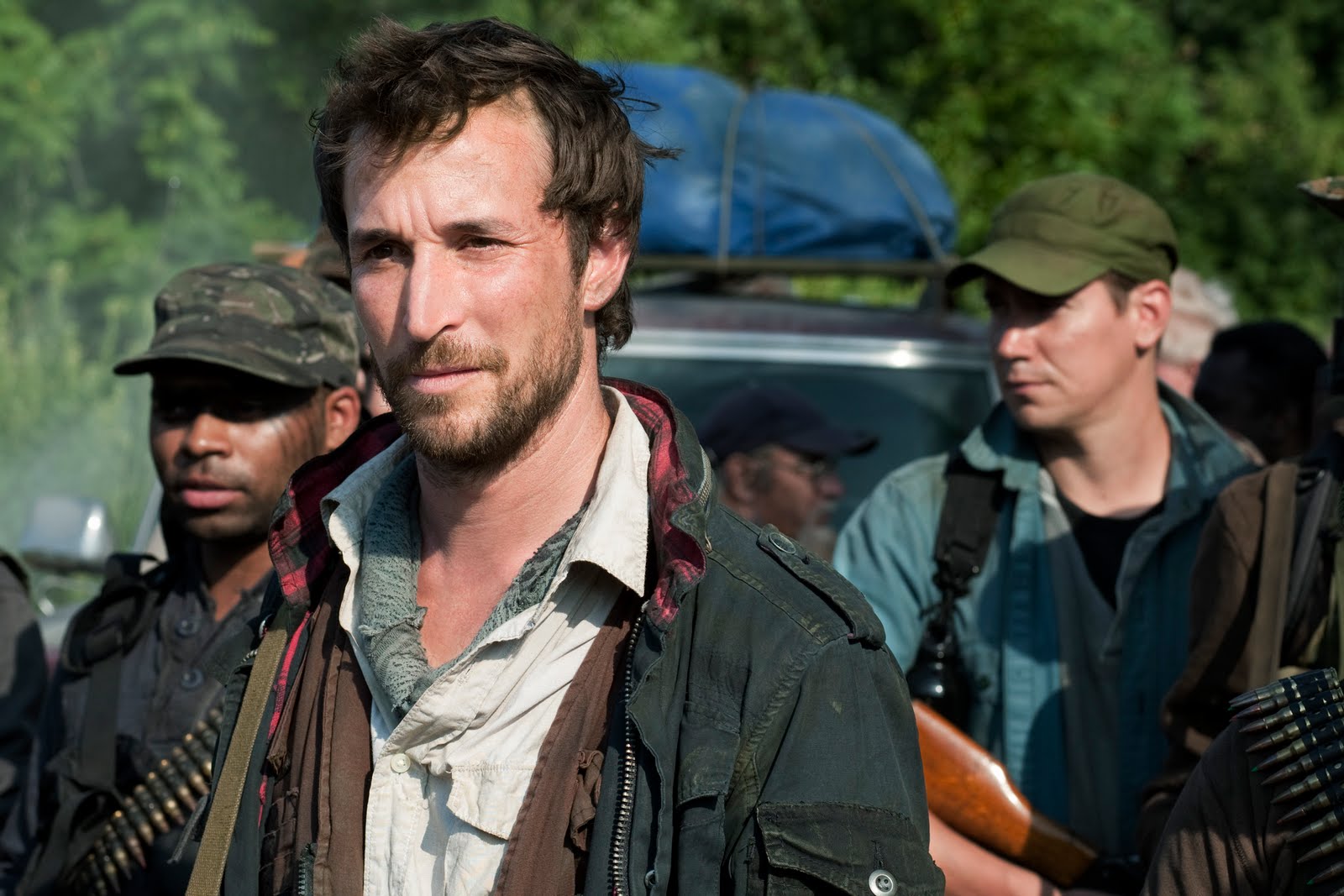
Caring father who doesn't want to fight leading a group of rebels.
A few years back, this would have been Mel Gibson, before he went nuts.

The characters, with very few exceptions, play to familiar archetypes. We have the eldest son who is cocky and rebellious, frequently challenging his father's authority. There is the sympathetic doctor who speaks up for the rights of the civilians in a society that is de facto controlled by the improvised sort of soldier caste. The grizzled leader who is obstinate for no reason frequently, and while being in charge seems to have no concept of how to manage the morale of those he leads. And, of course, there is the caring father, reluctant fighter and man of peace and learning whose ideas are typically clearly the right ones, but who is shut down so as to not be a threat to the grizzled commander's authority. When we meet other characters, they also tend to neatly fall into established tropes, such as the gang of violent racist rapists who are lead by an extremely intelligent and well-spoken, but entirely amoral man.

These characters all start from familiar and safe ground, and as a consequence, I don't think that many of them are as interesting as, say, the similar team of survivors we met in The Walking Dead. There, we saw things get complicated with the Best Friend and Protector, understanding that people can have multiple roles. “Good guy” and “bad guy” can easily become murky concepts as people make decisions based on what they feel is right at the time. I do like the inclusion of a thirteen year old in the emergent “fighter” caste, who watches children only a few years younger play and exist as something to be protected, while he is out with the adults fighting. I have some hope that the characters will grow and develop out of their stock archetypes as the story continues to be told.

I'm totally not going to give an order so stupid and horrible that it demands to be disobeyed.

The aliens themselves look amazing, and they move in distinctive and creepy ways, with their six-legs and swollen carapace-like heads. They are fast, tough, and extremely heavily armed with a weapon that is reminiscent of the triple-beam laser from Predator. They are supported by bipedal mechanized infantry that have even heavier weapons mounted, and whose armor effectively makes them immune to conventional small arms. The creatures display tactical intelligence, using stores of food and weapons as bait to trap groups of humans, and they seem to be adept at tracking and hunting their prey. We see two types of ships, the light fighters that provide air support and focus in on sources of heat on the ground, and the huge (about the size of a human city) structure in the distance that is presumably the alien mothership.

The stories told about how people cope with loss, deal with the collapse of everything they've ever known, and try to fight to survive without losing the essential elements of themselves that make them human may not be a new story, but it is one well told. The performances of the principal cast is uniformly good and the production of the series itself is of very high quality. I did notice that the sound design seemed to make dialogue way too quiet as compared to explosions and music during fight sequences, as I had to turn the volume frantically up or down to wither hear what was going on or to not wake up my sleeping wife. The visual effects are on par with Hollywood films in terms of quality, falling short only of the standards set by summer blockbusters who rely on such effects to distract the audience from the lack of a coherent script. For TV, the quality of both the scripts and the effects here are impressive.


Overall, I look forward to the rest of the season and hope that with the traditional broadcast networks constantly dropping the ball when it comes to science fiction and the “SyFy” channel preferring to air wrestling, that cable stations like TNT and AMC could be the future of great geek TV. We've certainly had a lot to complain about in the last few years, but shows like Falling Skies give me hope for a brighter future... (as least for us. The future for the survivors of the 2nd Massachusetts militia, not so rosy.) The industry juice that comes with the involvement of Stephen Spielberg doesn't hurt, and the series has already been picked up for a second season.